



The Reliability Decision Gap
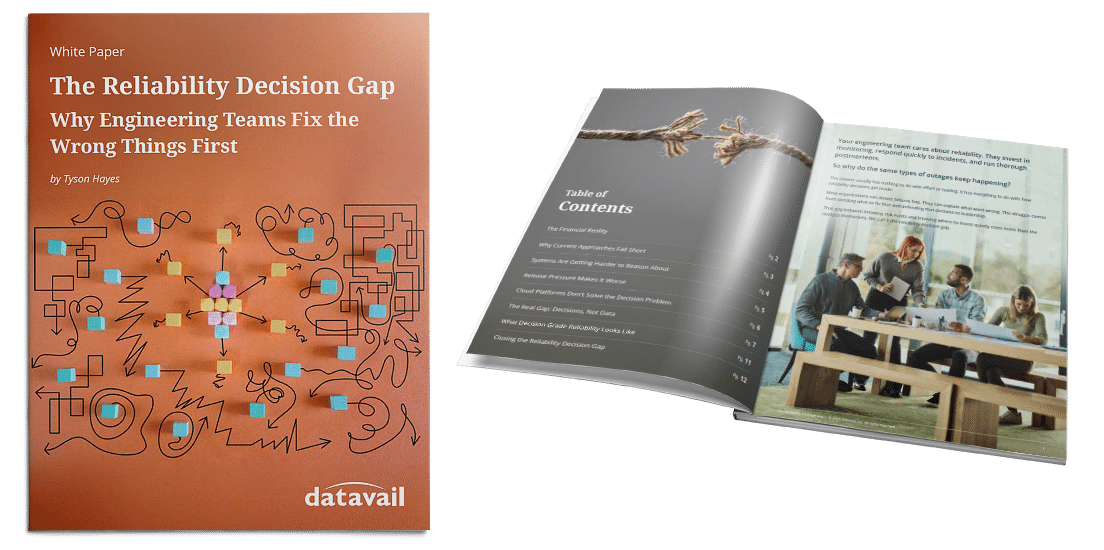
Reliability issues rarely come from a lack of effort or tools. Most teams detect incidents quickly but struggle to decide what to fix first. That gap leads to repeated outages, growing backlogs, and wasted engineering time. This white paper breaks down why reliability decisions stall and how organizations can prioritize work based on real business risk before the next outage impacts revenue and customer trust.
What You’ll Learn
- Why teams continue to experience recurring outages despite strong monitoring and response processes
- How unclear prioritization leads to wasted engineering effort and growing reliability backlogs
- The limitations of postmortems, observability tools, and architecture reviews in guiding decisions
- A structured approach to ranking reliability work based on systemic risk and business impact
- How to align engineering priorities with executive expectations for risk reduction and ROI
Preview
“Most organizations can detect failures fast… The struggle comes from deciding what to fix first and defending that decision to leadership.”
Reliability data is not the problem. The challenge is turning that data into clear, defensible decisions. Without a structured model, teams default to urgency or opinion instead of focusing on the work that reduces the most risk.
Fill out the form to get the full guide!
Stop reacting to outages and start focusing on the work that prevents them.
Frequently Asked Questions
What is the reliability decision gap?
The reliability decision gap is the disconnect between knowing where risks exist in a system and knowing which issues to prioritize first. Most organizations have strong monitoring and post-incident processes but lack a structured way to compare risks and determine which fixes will reduce the most business impact. This leads to repeated incidents and inefficient use of engineering resources.
Why is prioritizing reliability work so difficult?
Prioritization is difficult because existing tools focus on isolated insights. Observability shows what happened, and postmortems explain why an incident occurred, but neither ranks risks across the system. Without a unified model, teams rely on judgment, urgency, or internal debate, making it hard to justify decisions to leadership or align with business goals.
How does poor reliability prioritization impact the business?
When teams fix the wrong issues or delay high-impact work, costs compound over time. Organizations experience repeated downtime, wasted engineering effort, and growing technical debt. Leadership also loses confidence when reliability plans lack clear justification, making it harder to secure investment for preventative work that protects revenue and customer experience.
What does a better approach to reliability look like?
A more effective approach uses a structured, system-level model to identify how failures spread and where risk is concentrated. It prioritizes remediation based on potential impact to the business, not recency or narrative. This creates a clear, defensible backlog that engineering teams can act on and leadership can confidently fund.
Download the White Paper