


Assessing and Optimizing Database Workloads Before Migrating to Microsoft Azure
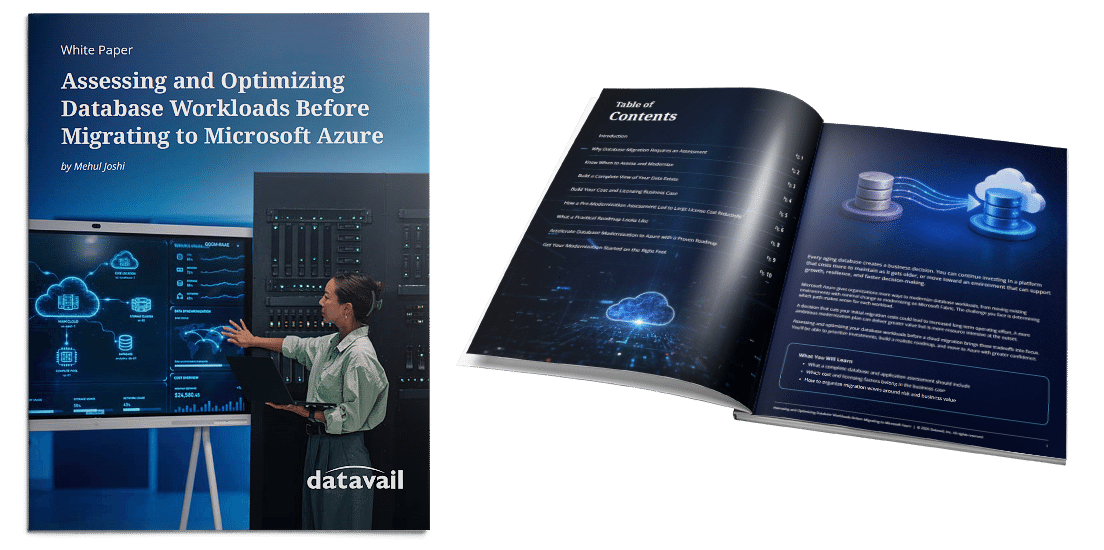
A database that looks like a perfect candidate for migration on paper may carry hidden dependencies, licensing challenges, performance requirements, or business risks that significantly impact cost and outcomes. You might think it’s the fastest path, but it could create years of unnecessary operational complexity.
Successful database modernization starts with understanding the workloads you already have. This white paper explores how your organization can assess your database environments, identify opportunities to reduce cost and complexity, and build a modernization roadmap that aligns technology decisions with business priorities.
Whether you’re responding to end-of-support deadlines, preparing for AI initiatives, reducing operating costs, or planning a datacenter exit, the right assessment can help you modernize with confidence and avoid costly surprises.
What You’ll Learn
- What a comprehensive database assessment should include before migration begins.
- Which cost, licensing, security, and support considerations belong in a realistic business case.
- A practical framework for prioritizing migration waves based on business value, risk, and complexity.
Build Your Azure Migration Strategy on Facts, Not Assumptions
Database modernization decisions have long-term consequences. Fill out the form on this page to download “Assessing and Optimizing Database Workloads Before Migrating to Microsoft Azure” to learn how to evaluate your data estate, create a credible modernization business case, and develop a roadmap that supports growth, resilience, analytics, and AI initiatives.
Frequently Asked Questions
Why is a database assessment important before migrating to Azure?
A database assessment helps organizations understand workload characteristics, application dependencies, performance requirements, operational risks, licensing considerations, and business priorities before migration begins. This reduces the likelihood of unexpected costs, delays, or post-migration issues.
When should organizations assess and modernize database workloads?
Common triggers include end-of-support deadlines, contract renewals, datacenter exits, rising operating costs, application modernization initiatives, AI projects, service retirements, mergers, and acquisitions.
How can organizations reduce costs before migration?
Opportunities often include retiring unused resources, consolidating workloads, rightsizing infrastructure, optimizing non-production environments, evaluating PaaS versus IaaS options, reviewing licensing strategies, and improving governance around consumption and ownership.
Download the White Paper