


AWS Is Putting Data and AI Agents to Work
Author: Cam Coulson | 7 min read | July 14, 2026
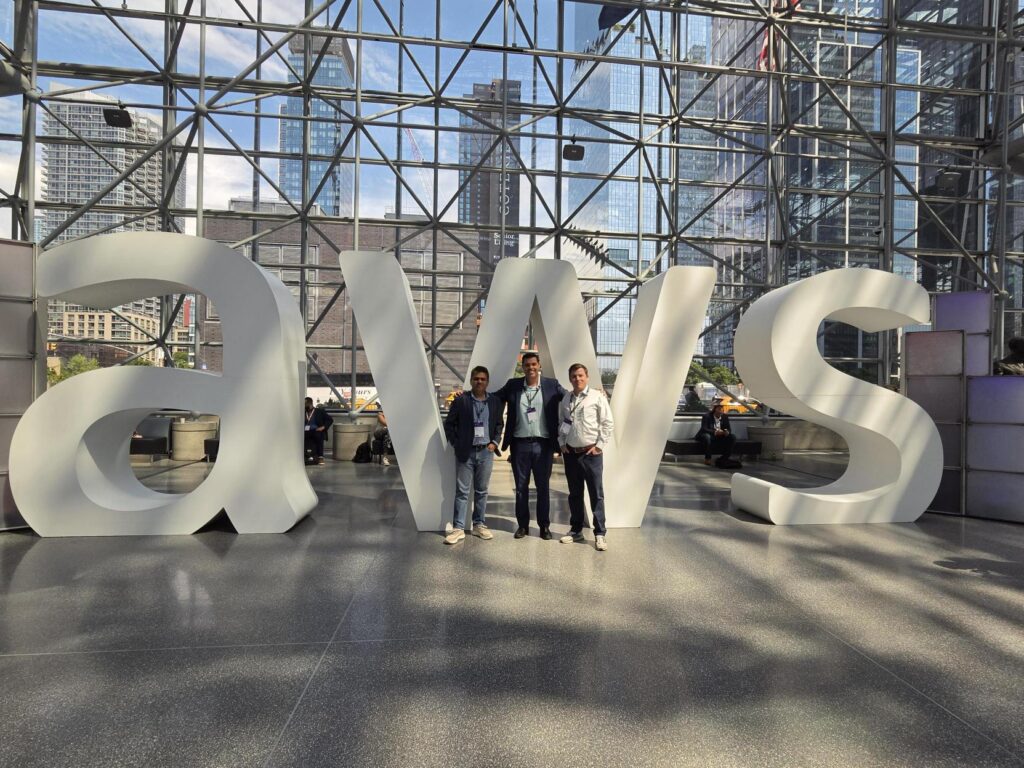
Toronto, Los Angeles, and New York each brought their own AWS Summit energy. Toronto showed up on time, apologized politely for not bringing more coffee, and wanted to talk serious data strategy. LA brought sunshine, big ideas, and just enough agentic AI buzz to make everyone wonder whether their next app demo needed a red carpet. New York, naturally, walked in last, grabbed the mic, and announced the really big things.
Across all three AWS Summits, one theme was impossible to miss: data and AI are no longer separate conversations. The real opportunity is in bringing them together, securely, intelligently, and at enterprise scale.
At the Toronto and Los Angeles Summits, AWS emphasized hands-on learning across cloud and AI innovation, with agendas packed with more than 145 expert-led sessions spanning data, agentic AI, security, digital transformation, and more. New York then turned that momentum into a set of major announcements focused on agentic AI, enterprise knowledge, modernization, security, and richer data context.
For Datavail, this was exactly the kind of AWS momentum we love to see. Our team participated in key roundtables and executive meetings with AWS Product Management, AWS sellers, and customers, bringing real-world perspective from enterprise data estates, modernization programs, managed databases, analytics, and AI adoption. We left these conversations energized, encouraged, and maybe slightly overcaffeinated, but most importantly, excited about where AWS is heading.
The Big Shift: AI Agents Need Enterprise Context
The loudest message from AWS Summit New York was clear: AI agents are becoming more capable, but they are only as useful as the data and context they can safely access.
AWS introduced AWS Context, a new service designed to automatically map relationships across existing enterprise data into a knowledge graph. The goal is to help AI agents understand data relationships, business rules, domain knowledge, and permissions at runtime—not just retrieve a random document and hope for the best.
That matters because enterprises do not have “one data source.” They have databases, data lakes, warehouses, lakehouses, dashboards, documents, CRM systems, messages, legacy systems, and that one spreadsheet everyone pretends is not mission critical. AWS Context is aimed at helping agents navigate that complexity with governed, identity-aware access.
For Datavail customers, this reinforces something we discuss every day: AI success starts with data readiness. Clean, governed, well-understood data is not a “phase two” activity. It is the foundation.
RDS Modernization and Funding: Because AI Still Needs a Database That Behaves
One of the most practical data themes coming out of the AWS Summit conversation was database modernization, especially for organizations looking to move aging, self-managed, or commercially licensed database workloads into managed AWS services like Amazon RDS and Amazon Aurora.
Why does that matter? Because AI agents, analytics platforms, and modern applications all depend on reliable, scalable, well-managed data foundations. Amazon RDS helps reduce the operational burden of relational databases by automating tasks such as provisioning, configuration, backups, patching, monitoring, and scaling. In other words, fewer late-night patching windows, fewer manual maintenance headaches, and fewer heroic database rescue missions powered entirely by coffee and fear.
AWS is also helping make modernization more achievable through services like AWS Database Migration Service, AWS Transform, and funding programs such as the AWS Migration Acceleration Program. Together, these capabilities can help customers assess, modernize, migrate, and fund the move from legacy database platforms to cloud-ready architectures.
For Datavail, this is where the opportunity gets especially exciting: helping customers reduce operational overhead, improve resilience, optimize licensing and cost, and create a stronger data foundation for AI. Because before an organization asks, “Can we use AI on this data?” it should also ask, “Is this database ready for what comes next?”
Amazon Bedrock Managed Knowledge Base: RAG Without the Rube Goldberg Machine
AWS also announced Amazon Bedrock Managed Knowledge Base, designed to help developers build enterprise-grade generative AI applications using proprietary data in minutes. It abstracts much of the heavy lifting behind retrieval-augmented generation pipelines, including storage, retrieval, embeddings, re-ranking, and model selection.
The new capabilities include native connectors for sources such as Amazon S3, SharePoint, Confluence, Google Drive, OneDrive, and web crawling, along with Smart Parsing and an Agentic Retriever for complex, multi-step queries.
That is a big deal for organizations that want accurate, grounded AI applications but do not want every project to begin with a six-month architecture debate and a whiteboard that looks like a subway map.
For Datavail, this aligns closely with how we help customers modernize data platforms and build practical AI use cases: connect the right data, govern it properly, optimize retrieval, and make the experience useful for the business.
AWS Transform, Continuum, and DevOps Agent: Modernization Gets More Autonomous
AWS also announced updates across AWS Transform, AWS Continuum, and AWS DevOps Agent. AWS Transform’s continuous modernization capability is designed to scan code repositories, identify technical debt, and generate remediation pull requests. AWS Continuum focuses on AI-native security, including discovering, prioritizing, validating, and remediating code vulnerabilities. AWS DevOps Agent adds release management capabilities to assess code changes before production.
These updates matter because data and AI modernization is not just about launching a chatbot. It is about modernizing the applications, databases, pipelines, and operating models that surround the data. Agentic AI can help accelerate that work, but only if it is paired with governance, security, and disciplined modernization.
That is where Datavail sees tremendous opportunity: helping customers move from “interesting demo” to “production-ready business outcome.”
Why Datavail Is Excited
At Datavail, we see these AWS announcements as a strong signal that the market is moving into a more practical phase of AI adoption. Customers are not just asking, “Can we use AI?” They are asking better questions:
- How do we prepare our data for AI?
- How do we govern agent access?
- How do we modernize the databases and applications that AI depends on?
- How do we move from pilots to scalable enterprise outcomes?
Those are the conversations Datavail is built for.
Our participation in AWS roundtables and executive meetings with AWS Product Management, sellers, and customers gave us a front-row seat to the priorities shaping this next wave. The direction is exciting: more managed services, more governance, more enterprise context, and more ways to turn data into action.
Toronto brought the thoughtful data conversations. LA brought the hands-on innovation energy. New York brought the headline announcements. Together, they told a very clear story: the future of AI is not just about smarter models, it’s about smarter data foundations, smarter modernization, and smarter execution.
Hopefully next year will bring smarter coffee line avoidance at summits too. We will gladly beta test that agent.
What Comes Next
Datavail is excited to help customers take advantage of these new AWS capabilities across data, AI, modernization, and managed services. Whether the goal is preparing data for generative AI, modernizing databases and applications, building governed agentic AI solutions, or improving enterprise analytics, the message from AWS is clear:
The organizations that win with AI will be the ones that make their data ready, trusted, secure, and actionable.
That is where the real work begins, and it’s exactly where Datavail is ready to help. Let our AWS experts know how we can help your organization.
